
Born in the U.S.A.
The inherent irony in the soundtrack of the 4th of July


Happy 250th Birthday, America.
Every Fourth of July I find myself reflecting on our nation’s story. I suspect millions of Americans do the same, even if they don’t realize it.
Two hundred and fifty years on, we remain what we have always been: an imperfect nation that has stumbled, struggled, and often fallen short of its own ideals. And yet, despite our failure, we have continued the long, unfinished work of becoming a more perfect Union.
Just listen to the soundtrack of one of our most hallowed traditions.
As fireworks burst overhead, speakers across the country play songs like Bruce Springsteen’s Born in the U.S.A., John Mellencamp’s Pink Houses, and Creedence Clearwater Revival’s Fortunate Son. They have become as much a part of Independence Day as hot dogs, parades, and flags waving in the summer breeze.
There’s just one irony.
None of these songs are uncomplicated celebrations of America.
Springsteen’s Born in the U.S.A. is perhaps the most misunderstood patriotic song ever written. The soaring chorus sounds triumphant enough to echo across a football stadium, but the verses tell a very different story. They follow a working-class man sent to fight in Vietnam who returns to find the factories closed, opportunities gone, and little gratitude waiting for him.
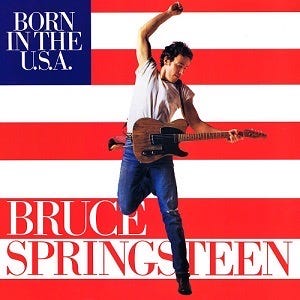
“Come back home to the refinery
Hiring man says, ‘Son, if it was up to me…’”
The song is not questioning whether America is worth loving. It is asking whether America has kept faith with the people who sacrificed for it.
That distinction has been missed before.
During the 1984 presidential campaign, Ronald Reagan’s reelection effort publicly embraced Springsteen and even referenced his music as emblematic of American optimism. Springsteen himself quickly rejected the association, noting that the song was about people who had been left behind by the very country they served. The booming chorus had obscured the painful story unfolding underneath it.
John Mellencamp’s Pink Houses has suffered a similar fate.
Its chorus:
“Ain’t that America…”
is often heard as uncomplicated celebration.
But listen to the verses.
Mellencamp introduces us to people working hard, scraping by, and trying to believe the promise that tomorrow will be better than today. He describes an old man man sitting on his porch with an “interstate running through his front yard” and a young couple struggling to build a life together. The song asks whether owning a little pink house and a little piece of land is still attainable or merely an image we’ve convinced ourselves to admire.
It is less a victory lap than an honest conversation about whether the American Dream remains within reach.
Then there’s Creedence Clearwater Revival’s Fortunate Son.
Few songs cut more directly into America’s contradictions.
“It ain’t me, it ain’t me,
I ain’t no senator’s son.”
John Fogerty wasn’t protesting America itself. He was protesting a system in which the burdens of military service during Vietnam often fell disproportionately on working-class families while the well-connected found ways to avoid them.
The complaint was never that America asked too much of its citizens.
It was that America wasn’t asking equally.
Even Woody Guthrie’s This Land Is Your Land, another Independence Day staple, is more complicated than many remember. The verses most schoolchildren learn celebrate the country’s natural beauty. Less often sung are the verses questioning private property and describing hungry Americans standing in relief lines during the Great Depression.
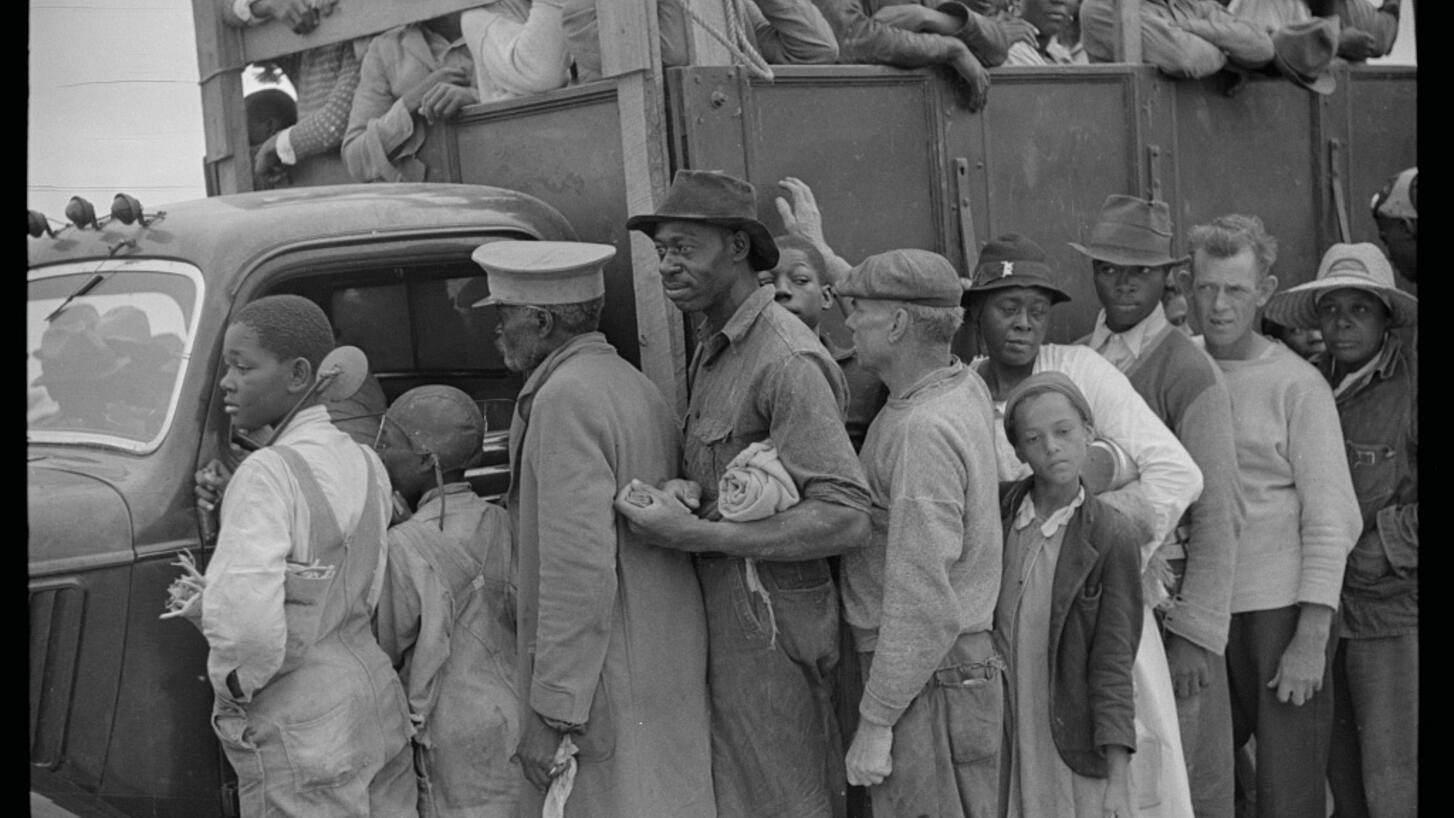
Time and again, we turn our national celebrations into sing-alongs with songs that challenge us.
That isn’t hypocrisy.
It’s one of the most remarkable features of the American experiment.
These songs have always been deeply American, not despite their criticism, but because of it.
A free people do not demonstrate love of country by insisting it has never failed.
They demonstrate love by believing it can do better.
That idea sits at the heart of what I have come to think of as American opportunity.
When I write about healthcare, education, meaningful work, or national defense, I am rarely arguing that America has fulfilled its promise. I am arguing that the promise itself is worth preserving—and extending to more people.
Criticism without hope becomes cynicism.
Patriotism without criticism becomes mythology.
America has always lived somewhere between those two extremes.
Our greatest achievements have come not from pretending we were perfect, but from generations of citizens who loved this country enough to demand that it live up to its own ideals.
As we celebrate 250 years of independence, it is worth remembering that the Declaration of Independence itself was, fundamentally, a document of criticism. It cataloged grievances, challenged authority, and insisted that the nation could become something better than what existed before.
In that sense, Springsteen, Mellencamp, Fogerty, and Guthrie are participating in a tradition almost as old as the Republic itself.
So tonight, as fireworks illuminate the sky and Born in the U.S.A. echoes from speakers somewhere in the distance, listen to the verses as carefully as the chorus.
The songs we choose to celebrate with are telling us something.
Not that America is flawless.
Not that America is hopeless.
But that America is always unfinished.
And perhaps that is the most American idea of all.
Happy 250th birthday, America.
Look up Mathew Mcconnaugghey x post from today. It will resonate with you, IMO
And be proud always to be an American!!!
You might consider adding to that list one of the greatest--IMHO--songs in that same tradition, though one rarely if ever hears it anymore: Phil Ochs's *Power and Glory*.
https://www.youtube.com/watch?v=LWcJVojSNk8
Phil Ochs was a man of the Left, but he was was deeply patriotic and loved his country--a phenomenon much more common then than it is now.
Nor--unlike so many of his era--was he duped by the siren song of Communism. He knew they were bad guys. Here's *Knock on the Door* to illustrate:
https://www.youtube.com/watch?v=beLWF9eqnnU
That is one of the things that make me both sad and angry: so many Americans nowadays--many on the left, but the right is by no means immune--seem to hate our country--and apparently that Old Time (Commie) Religion is making a comeback too... :-(